How to Read Your Smoking Heatmap for the First Easy Cuts
- Home
- Baseline Audit
- Heatmap Worksheet
- How to Read My Smoking Heatmap to Find the First Easy Cuts
If you're asking How do I read my smoking heatmap to find the first easy cuts, start with one rule: do not attack the cigarette that feels like your stress lifeline. Look for the repeat smoke that shows up often, carries almost no urge, and disappears when you delay it, move the lighter, or swap the routine. That is your safest first win—the cut that lowers your daily count without triggering deprivation panic. From there, score each hotspot by frequency, emotional load, and swap ease so tomorrow’s plan stays small and doable.
How to Find Your First Easy Cuts Using a Heatmap
To read your smoking heatmap and safely reduce your count without relying on willpower:
- Find low-friction zones: Look for high-frequency clusters on your grid that have a low emotional urge rating (1 or 2).
- Score the hotspots: Evaluate these clusters based on frequency, emotional load, and how easy the physical routine is to swap or disrupt.
- Target the extraction zone: Choose just one mindless, habit-driven cigarette and delay it by 15 minutes or swap the physical routine.
- Protect your lifelines: Intentionally leave your high-stress emotional cigarettes completely alone to prevent willpower depletion and rebound binges.
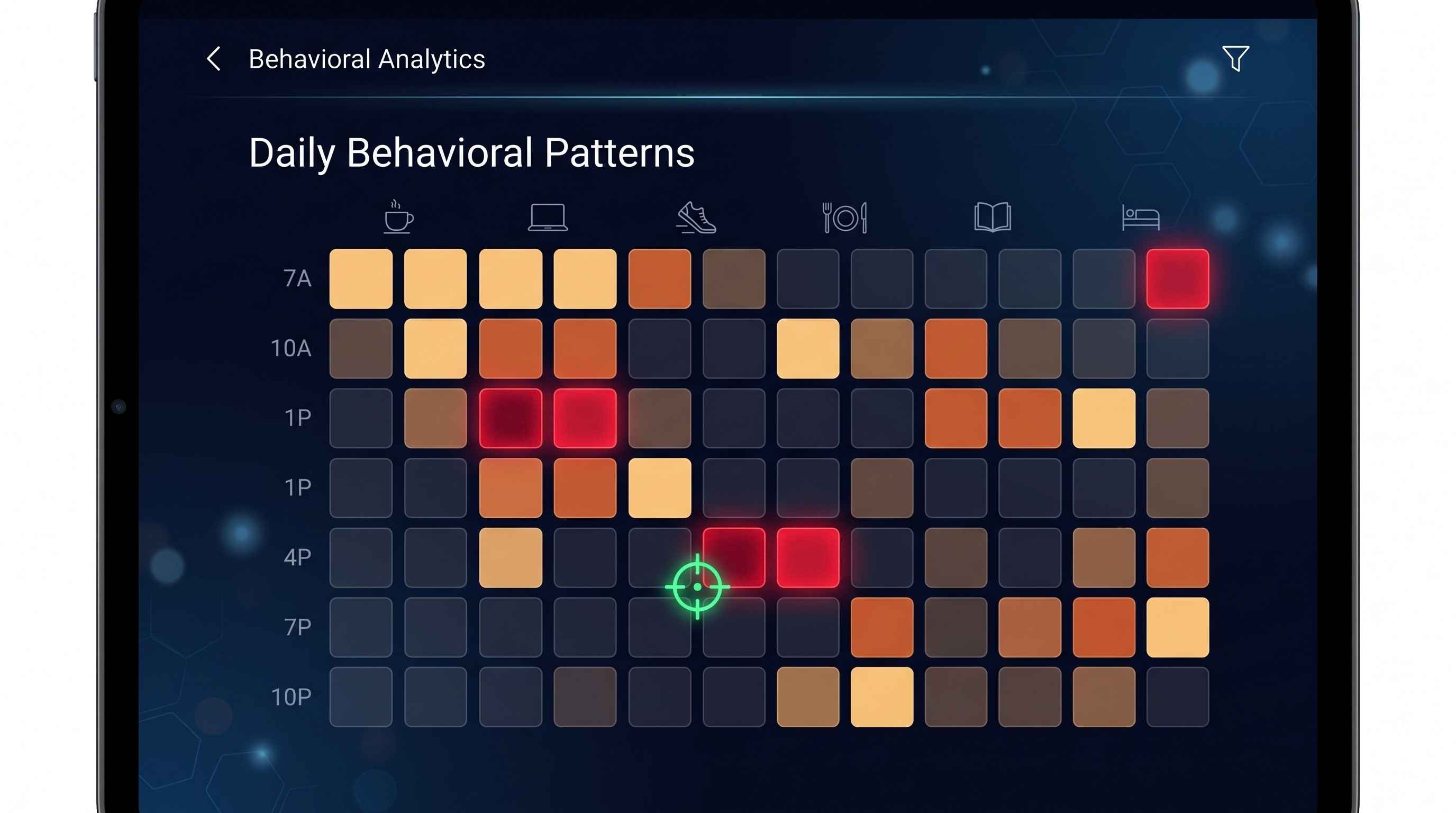
Find Your Low-Friction Zones First
A completed smoking heatmap is not a ledger of guilt; it is an objective diagnostic dashboard. Your goal is not to plan a total, cold-turkey quit today. Your goal is to separate the cigarettes you actually rely on for stress relief from the ones you smoke purely out of habit. You need to distinguish between emotional triggers (driven by feeling states like stress or anger) and pattern triggers (activities connected with smoking, like commuting, finishing a meal, or screen time). Your job is to hunt down the pattern triggers first.
Before creating my heatmap, I called my evening screen-time cigarette my "wind-down lifeline," convinced I needed it to relax. But looking at my completed matrix, I saw a deep red cell in the Evening (7 p.m.–10 p.m.) time block, logged entirely under the "Boredom" routine column with a low Urge Strength of 1.
I decided to pay closer attention the next night. I was sitting at my desk scrolling through an article, feeling zero physical craving or tightness in my chest. Then I noticed the physical loop: my hand simply dropped from the mouse to the lighter resting exactly an inch away, striking the flint before I even broke eye contact with the monitor.
The next night, I moved the lighter to another room and held a pen instead. The "need" vanished without any withdrawal panic. That taught me the first easy-cut rule: a cigarette isn’t always an emotional lifeline—sometimes it is just a mechanical glitch waiting to be swapped.
Score Each Hotspot by Frequency, Emotion, and Swap Ease

Not all deep red squares on your heatmap are created equal. To find your first cuts, you must filter your hotspots through three criteria. Use this simple, private scoring checklist as you look at your grid:
- Frequency
(The Cyan Crosshair): Is this a recurring, entrenched loop (marked
with a cyan crosshair for 5+ entries), or is it just an amber warning
triangle (a one-off crisis spike from a single bad day that shouldn't
be overinterpreted)?
- Emotional
Load (Urge Strength): When you logged this, was the Urge Strength a 5
(Overwhelming)? If forced to delay this cigarette by 15 minutes, would you
feel immediate irritability and an urgent need to bargain, or just a
fleeting, empty-handed annoyance (Urge Strength 1 or 2)?
- Swap Ease: Can I replace this with a short distraction right where I am sitting, without extra setup or having to announce it to anyone?
Looking at my two-week heatmap, the Afternoon (4P–7P) post-work block and the Evening (7P–10P) screen-time block looked identical. Both were deep red cells with 13 or 14 marks each. If I only scored by frequency, they tied as top priorities. But applying the emotion and swap-ease filters revealed completely different realities.
The Afternoon cigarette was emotionally heavy; if someone stopped me to talk on my way out the door, I would feel my jaw clench, and my breathing get shallow until I could finally step outside and light up. The Evening cigarette, as I had just discovered, was nothing more than a low-resistance context glitch.
I made a strict choice: I swapped the Evening cigarette for a cup of tea, and I explicitly left the Afternoon stress cigarette completely alone. By intentionally ignoring the hardest trigger and targeting the zero-friction loop instead, I successfully lowered my daily count without triggering the deprivation panic and rebound binges that had ruined my past attempts.
Pick One or Two Cuts for Tomorrow
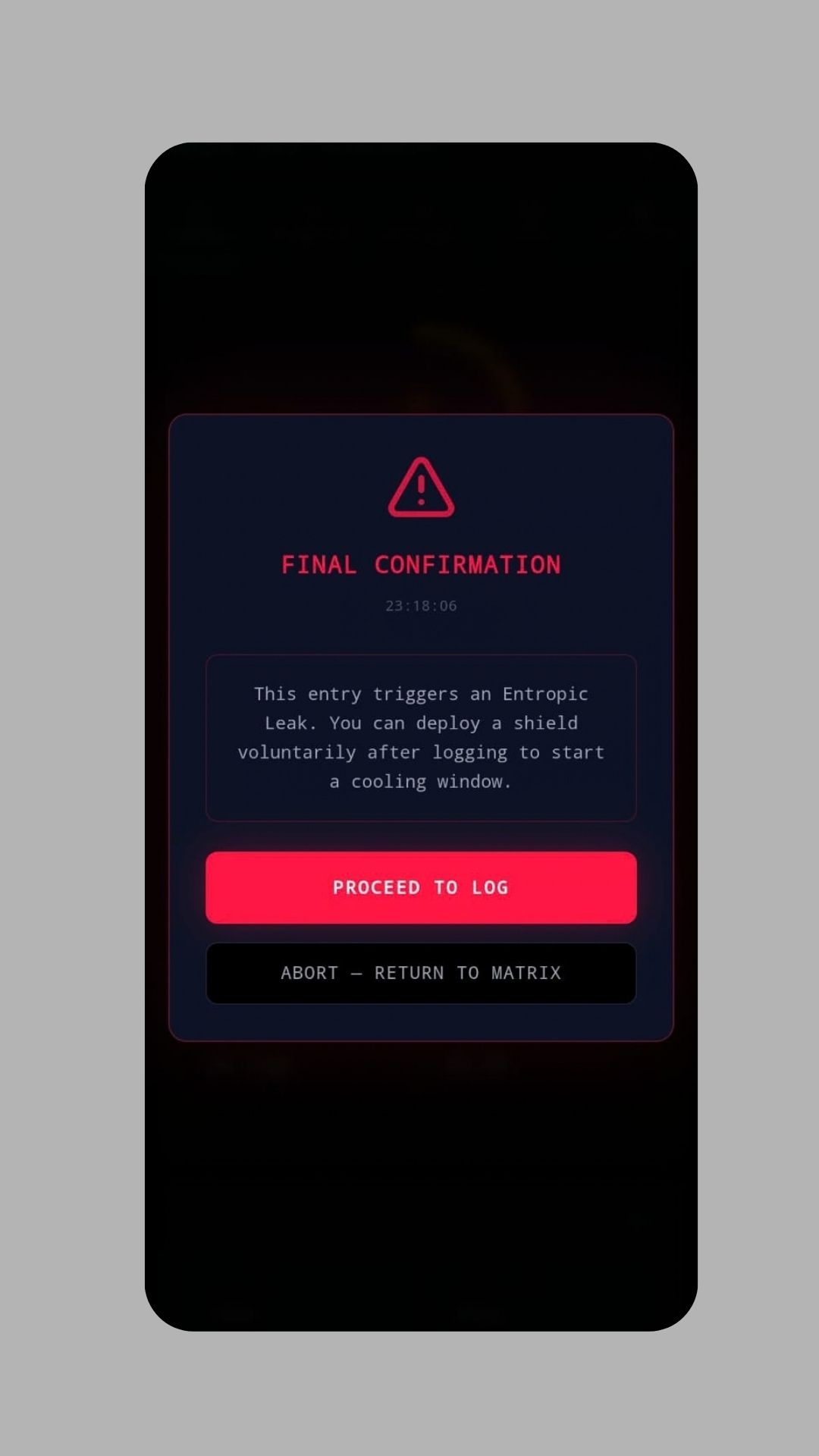
Reading your heatmap should result in a micro-plan for tomorrow, not a sweeping lifestyle overhaul. Once you identify a low-friction, high-frequency cluster, choose a simple replacement action to break the association.
Instead of guessing, look for the green target icon on your heatmap. This is your Extraction Zone—the weakest time block where your cigarettes are contextually driven, not chemically driven. If you delay this specific cigarette by just 15 minutes, the craving will dissolve alongside the task that triggered it. (If you are using a paper grid, physically circle your lowest-friction target right now).
My plan for the next day was tiny: target the green Extraction Zone in my Evening block and delay that mindless smoke by fifteen minutes. To protect myself from deprivation dread, I made an explicit promise that my heavy Afternoon post-work cigarette was completely safe and untouched.
The first real test hit during my Evening block when I sat at my desk and grabbed the computer mouse. I felt a brief muscle-memory twitch as my hand automatically reached for the spot where the lighter usually sat, but my chest stayed completely loose. There was no rising anxiety or panic.
Instead of white-knuckling through a craving, I simply picked up a pen, clicked it a few times to occupy my fingers, and kept reading my screen. By bedtime, I had successfully removed two cigarettes from my daily total without a single moment of distress. As I turned off the lights, my only thought was, "I actually did it, and it didn't even hurt." I was excited!
Leave High-Stress Cigarettes for Later
The biggest mistake you can make after completing your heatmap is trying to eliminate your highest-stress "lifeline" cigarette first. When I fell into this trap, the first sign of failure wasn't physical withdrawal; it was aggressive bargaining. I told myself that if I just smoked half a cigarette right then, I would easily skip two the next day. That mental static drained my willpower so quickly that within an hour, I rebelled, chain-smoked two back-to-back, and completely abandoned the entire reduction attempt.
Attempting to white-knuckle your hardest trigger often leads straight to a rebound binge. This happens because nicotine withdrawal itself acts as a powerful physical withdrawal trigger, causing internal stress that perfectly mimics emotional anxiety.
If you want a flawless system to guide you through this, you can use our mobile app, Smoke Loop Intercept. It provides a comprehensive mechanism not only to build this exact visual matrix automatically, but also to make it painless to intercept your smoking loop. The app separates your Weekday operational routines from your Weekend rest days, flags amber single-day outliers so you don't panic over a bad day, and calculates your green Extraction Zone to guide your safest daily cuts.
Instead of fighting massive cravings, follow this mechanical rule: keep your high-stress emotional lifelines completely stable and untouched for now, and strictly target your lowest-friction autopilot loops first.

About Saqib Ali Ateel:
Saqib Ali Ateel is a senior systems analyst and the Chief Architect of SmokeTally & Smoke Loop Intercept App. Drawing on his executive oversight of public infrastructures serving millions and his research as a PhD Scholar, he engineered the Smoke Loop Intercept Protocol to dismantle the smoking habit loop using objective telemetry rather than willpower or counseling theater. A former heavy smoker, Saqib utilized these precise mechanical baselines to intercept his own neurochemical hardware. When not working in official capacity or working on his PhD, he studies intersection of physics, biology, and human agency. Check Saqib’s details on LinkedIn.